
This is probably one of the most asked questions in online forums and the answers are heavily influenced by personal preferences.
Sony boys praise Sony, Nikon guys sing the Nikon song and Canon shooters, like myself, recommend Canon. They are all partially correct and completly wrong at the same time.
While it is possible to capture reasonably good astro images with just about any DSLR or mirrorless camera released in the last years, it is impossible to answer the question which is the best. Why? It is like asking “What is the best pan for cooking?”.
Fact is, that a good cook can produce a delicious meal in almost any pan and a good photographer can shoot decent images with almost any camera.
To make a meaningful recommendation, there is a wide selection of variables to be considered.
Work with what you already own
Do you own a reasonably new DSLR, mirrorless or a smartphone with a good camera? Maybe even a tripod? Great, you already own all you need to start dabbling with astrophotography! Of course you will not capture Hubble- or JWST-like images, but as a beginner, you could neither do that with a 10’000$ camera.
Most astrophotographers, including myself, are not limited by their equipment, but by their skills. My recommendation is therefore to start with what you already own. If you evenually hit the limits of your equipment, you’ll know what your next step should be and you have acquired a lot of skills along the way.
If you already own lenses of a certain brand, it also makes sense to stick to that brand. Most photographers buy their quality lenses for life, but as technology advances, they change their cameras every few years.
If you do not own a camera or a good enough smartphone, you should consider a few more things:
What kind of astrophotography is planned?
Deep space imaging is a completely different field than landscape astrophotography from a fixed tripod and shooting nightscapes with a tracking mount is somewhere in between.
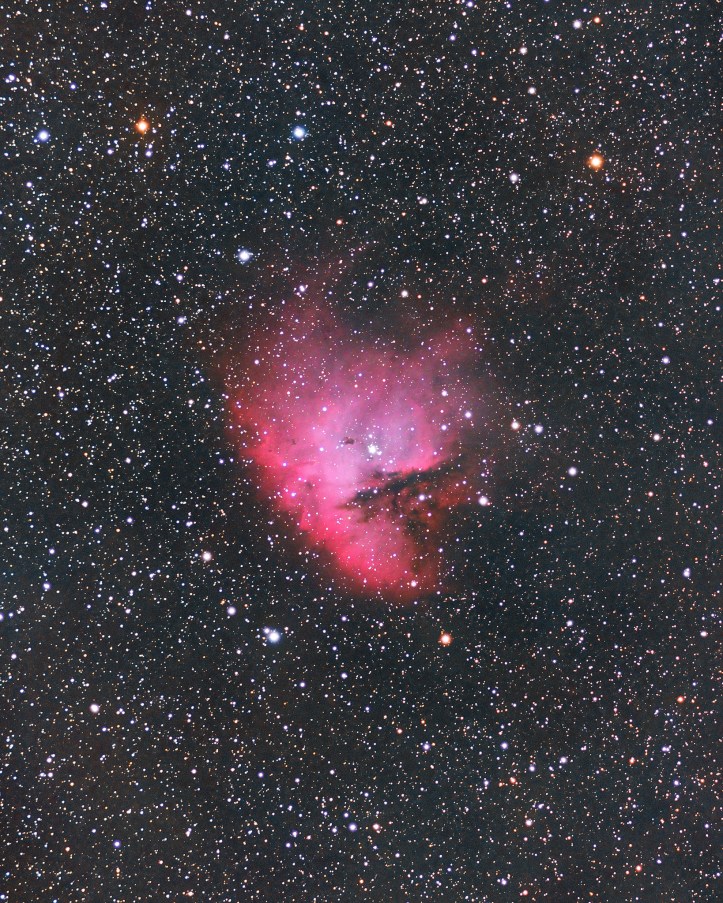
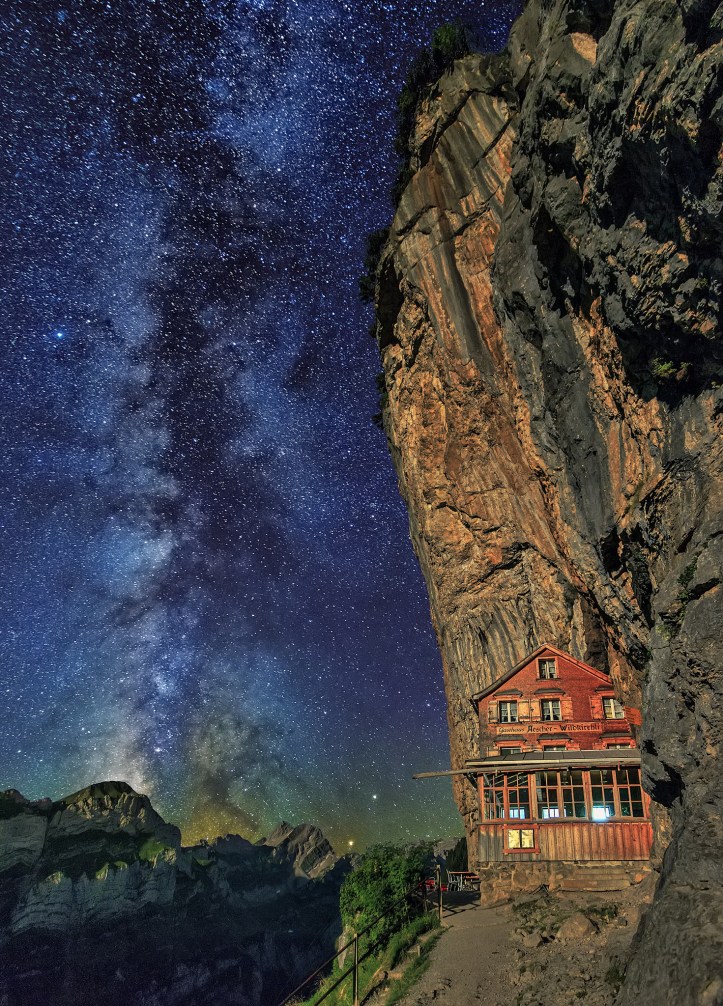
The leading deep space imagers are mostly using cooled astro-cameras, but these make little sense for landscape astrophotography, where DSLR or mirrorless cameras are the better choice, as they are lightweight and can be operated without a computer and external power supply. After all, you probably do not want to carry dozens of kilograms of equipment on a hike to reach your shooting location.
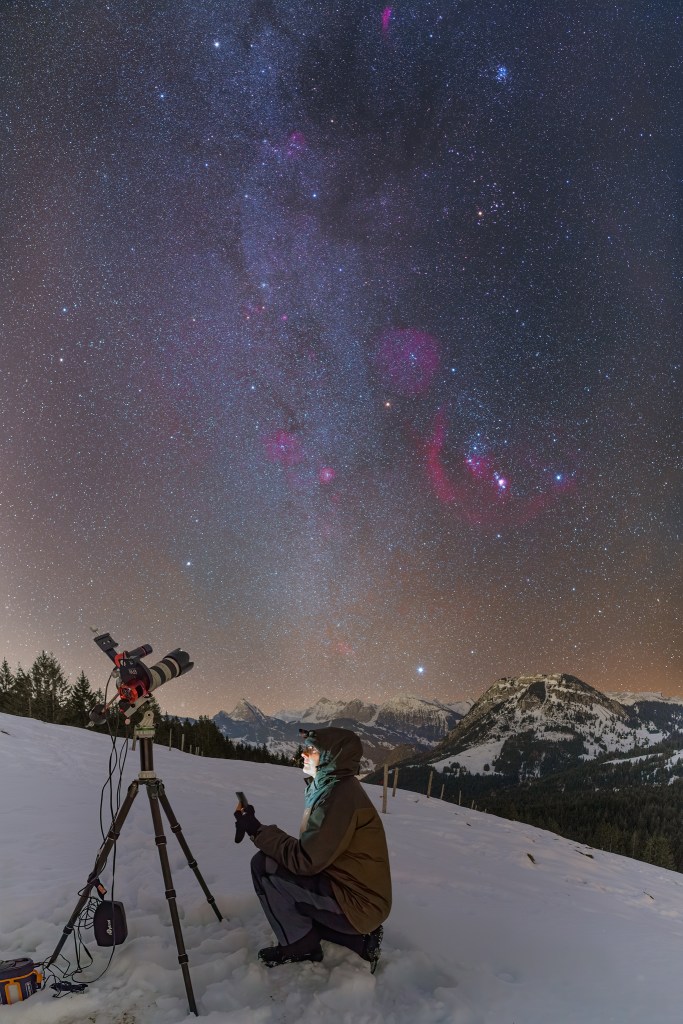
What is the budget?
Whatever your financial limit is, as a beginner you have to decide how much you are able and willing to spend on photographic equipment.
IMO it doesn’t make much sense to spend thousands of dollars, just to find out that astrophotography isn’t for you, after all. This rules out buying the newest and most expensive cameras, except if you want to use them for daylight photography as well. Fortunately, this isn’t needed.
What you don’t need
There are a few things that you don’t need at all for astrophotography. These are:
– Autofocus
– Image Stabilization
– Video Capabilities
– Fast Frame Rates
However, these are the fields, where camera technology made the biggest progress in the past years. Many daylight photographers move on to newer cameras, exactly because of these features and sell their old cameras on the secondhand market.
That’s great news for aspiring astrophotographers, as you can find some excellent cameras for very reasonable prices.
It is not only the camera
While you can shoot with a smartphone, a camera body alone will not allow you to capture anything. You need a few more things:
– The lens
You do not need a telescope for astrophotography. 90% or more of my images were captured with regular photographic lenses.
A wide angle lens is a good way to start doing landscape astrophotography, because longer focal lengths are also enlarging the errors and are requiring a tracking mount.
As autofocus is not needed, manual lenses are a good and cheap choice for astrophotography. When shooting from a fixed tripod the lens should however be reasonably fast. A maximum aperture of f/2.8 or faster is recommended. Fortunately, brands like Samyang, Irix, Tokina or Tamron have a wide selection of reasonably priced, fast lenses that are good enough for astrophotography.
– The mount
Experienced deep sky imagers say that the mount is the most important piece of equipment in astrophotography.
In landscape astrophotography, the same is true, as you won’t be able to capture any good images without a stable tripod.
Another piece of equipment used in landscape astrophotography, is a tracking mount. These little devices move the camera with the stars and enable it to capture long exposures without star trailing. While they are not very complicated to operate, I nevertheless recommend beginners to start with fixed tripod Milky Way photography, as this is the easiest way to successfully capture good looking nightscapes.
– Sensor size
A recommendation you often hear is that a full frame sensor is the best choice for astrophotography, but that’s not always true.
A big sensor can have advantages in noise performance, but it also requires more expensive optics. That’s why many excellent deep space imagers work with APS-C or Micro Four-Third sensors. The ZWO ASI2600 and the ZWO ASI 1600MM Pro are two very popular examples of widely used, cooled astro-cameras with such sensors.
For landscape astrophotography, a full frame camera is certainly the most popular choice, but you can still get excellent results with smaller sensors. I started in 2015 with a Canon EOS 7D mkii and a cheap Samyang 10mm f/2.8 lens, which still makes a very nice combo.
Recommendations
You read everything until here? O.K. You finally deserve some recommendations. After all, that’s what you have been waiting for.
I will not talk about deep space imaging, as I recommend beginners to start with landscape astrophotography and expand into the technically more complex deep space imaging as their skills expand.
My recommendation is to look for a used camera. Despite being sold for 10 years now, the Canon EOS 6D or the Nikon D750, are still considered some of the best choices for high ISO photography in low light conditions and you can often find them for under 500$.
If you pair one of these with an inexpensive manual lens, like e.g. the Samyang 14mm f/2.8 and a small travel tripod, you’ll be ready to capture good nightscapes for under 800$.
If you want, you can later astro-modify the camera to make it more sensitive to the red hydrogen emission nebulae. This will cost roughly another 300$.
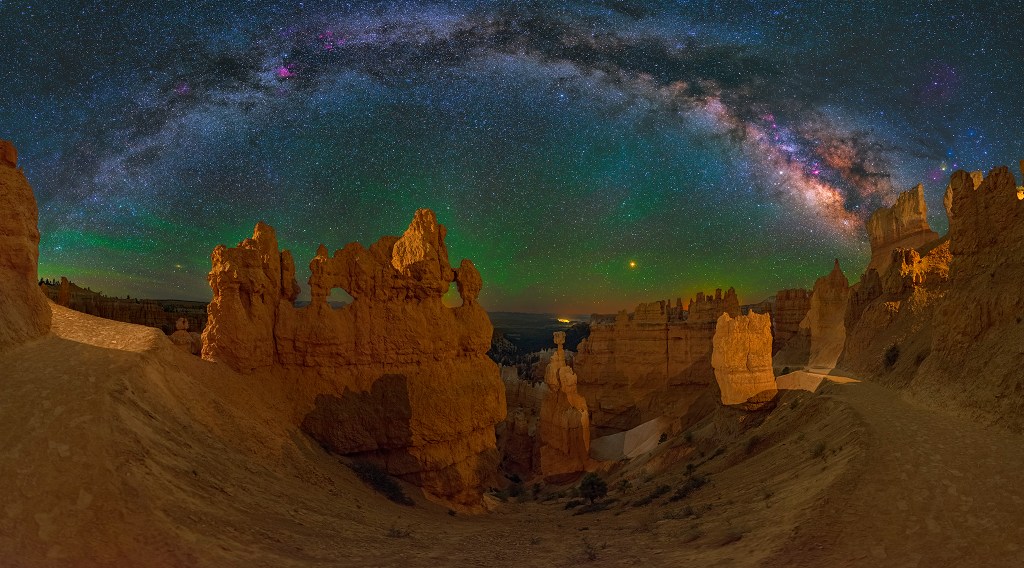
Another option would be an APS-C body like the Canon EOS 7D mkii, the 80D or 90D or a Nikon D5600 or D7500, paired with a Tokina 11-20mm f/2.8 lens.
What about other brands?
Missing other brands, like e.g. Sony, Fuji, Pentax, Panasonic or Olympus? The reason for this is that I either have no hands-on experience with them, that they do not fit my personal preferences or that I consider them overpriced, compared to my recommendations above. This however doesn’t mean that they are bad choices for landscape astrophotography.
 Skypointer Photography Blog